Mejorando la tracción
Una estrategia clave para la prevención de resbalones
Mantener la tracción es una de las formas más efectivas de prevenir resbalones, pérdida del equilibrio y accidentes laborales.
Si los trabajadores operan techos, plataformas industriales, muelles de carga, estructuras agrícolas, cubiertas de barcoso en obras de construcción, una tracción adecuada ayuda a mantener la estabilidad y el control.
Muchos accidentes comienzan con una simple pérdida de equilibrio.
Mejorar la tracción reduce la probabilidad de resbalones antes de que ocurra una caída.
Esta guía explica cómo funciona la tracción, los factores que influyen en el agarre y las soluciones disponibles para mejorar la seguridad de los trabajadores.

¿Qué es la tracción?
La tracción es la capacidad de la suela de un calzado para mantener el agarre sobre una superficie para caminar.
Una tracción adecuada permite a los trabajadores:
- caminar con seguridad;
- mantener el equilibrio;
- cambiar de dirección;
- transportar materiales;
- Trabajar en superficies inclinadas.
Una tracción insuficiente aumenta la probabilidad de resbalando.
La tracción depende de la interacción entre:
- la superficie para caminar;
- el único material;
- contaminantes de superficie;
- condiciones ambientales;
- movimiento obrero.
Por qué es importante la tracción
Muchos accidentes laborales comienzan con:
- resbalones;
- pérdida de equilibrio;
- movimiento inesperado.
Mejorar el agarre a menudo reduce el riesgo antes de que sean necesarias medidas de protección adicionales.
Una buena tracción contribuye a:
- estabilidad;
- confianza;
- movilidad;
- productividad;
- fatiga reducida.
Porque los deslices frecuentemente inician cae, la tracción debe considerarse una medida de prevención primaria.
Cómo funciona la tracción
La tracción depende de la fricción entre dos superficies.
Varios mecanismos contribuyen al agarre:
- contacto superficial;
- enclavamiento mecánico;
- deformación del material;
- adherencia.
Cuando una suela se adapta a pequeñas irregularidades de la superficie, el área de contacto aumenta y mejora el agarre.
El agua, el polvo, el aceite y los contaminantes pueden reducir estos mecanismos.
Factores que afectan la tracción
Material de la superficie
Diferentes superficies proporcionan diferentes niveles de agarre.
Los ejemplos incluyen:
- hormigón;
- acero;
- aluminio;
- madera;
- azulejo;
- superficies recubiertas.
Los materiales lisos suelen proporcionar menos agarre mecánico.
Condición de la superficie
La tracción cambia cuando las superficies se vuelven:
- mojado;
- polvoriento;
- aceitoso;
- helado;
- contaminado.
Incluso pequeñas cantidades de humedad pueden reducir la fricción.
Textura de la superficie
Las texturas rugosas generalmente mejoran el agarre.
Las superficies texturizadas crean más oportunidades para el compromiso mecánico entre la suela y la superficie para caminar.
Pendiente
A medida que aumenta el ángulo de la superficie, se requiere mayor tracción para mantener la estabilidad.
Las superficies empinadas suelen exigir soluciones especializadas.
Calzado y Tracción
El calzado juega un papel importante en el rendimiento de la tracción.
Las características importantes incluyen:
- material de suela;
- flexibilidad única;
- diseño de la banda de rodadura;
- área de contacto;
- geometría de la suela;
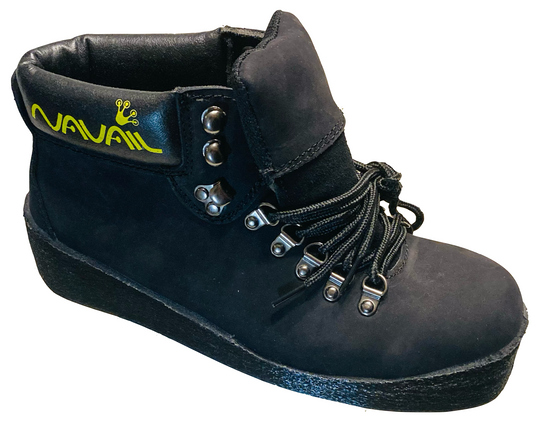
- imanes integrados en calzado especializado;
Diferentes aplicaciones requieren diferentes enfoques.
Una suela optimizada para terrenos fangosos puede tener un mal desempeño en acero liso.
De manera similar, una banda de rodadura muy agresiva puede no proporcionar un contacto óptimo en superficies planas.
Compuestos de caucho
El compuesto de caucho influye:
- flexibilidad;
- durabilidad;
- agarre.
Los compuestos más blandos pueden aumentar el contacto con la superficie y mejorar la tracción.
Los compuestos más duros suelen mejorar la durabilidad.
La selección del equilibrio adecuado depende de la aplicación.
Diseño de banda de rodadura
Los patrones de la banda de rodadura pueden ayudar:
- evacuar el agua;
- contaminantes del canal;
- aumentar la flexibilidad;
- mejorar la estabilidad.
Los tacos grandes pueden funcionar bien en terrenos sueltos.
Las áreas de contacto más planas pueden funcionar mejor en superficies lisas.
La banda de rodadura ideal depende del entorno de trabajo.
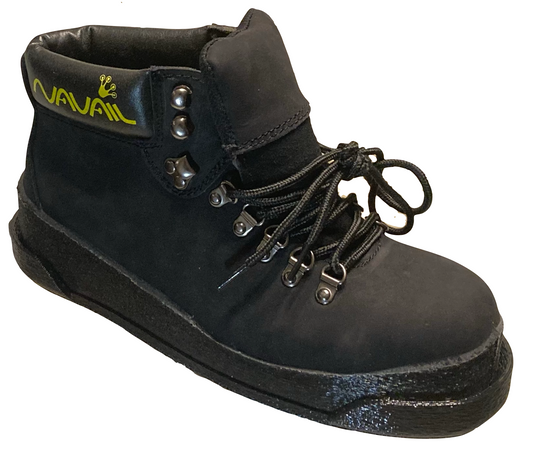
en NAVAIL™, hemos desarrollado un diseño exclusivo de la banda de rodadura que mejora significativamente el agarre en superficies mojadas.
Patrón de suela optimizado para zapato magnético en superficies secas o mojadas:

Tratamientos superficiales
La tracción también se puede mejorar modificando la superficie para caminar.
Los ejemplos incluyen:
- revestimientos antideslizantes;
- tiras abrasivas;
- acabados texturizados;
- superficies de metal expandido;
- rejilla.
Estas soluciones se utilizan habitualmente en instalaciones industriales y pasarelas.
Drenaje y limpieza
Los contaminantes a menudo reducen la tracción.
El mantenimiento regular puede incluir:
- retirar escombros;
- drenar el agua;
- aceites de limpieza;
- eliminando materiales sueltos.
Una buena limpieza ayuda a mantener el rendimiento de la superficie.
Tecnologías de tracción especializadas
Algunos entornos presentan desafíos únicos.
Los ejemplos incluyen:
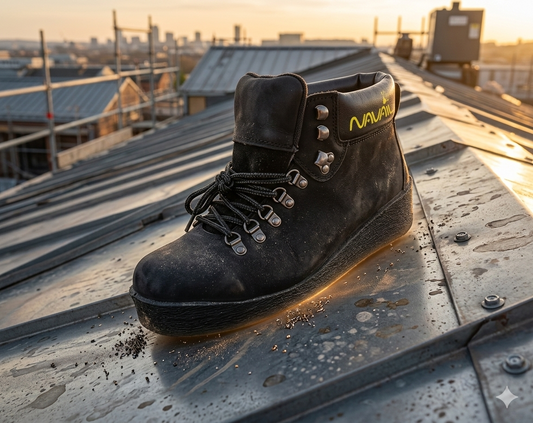
- techos de acero liso;
- plataformas metálicas;
- cubiertas de barcos;
- tanques industriales.
Se han desarrollado tecnologías especializadas para aplicaciones específicas.
Los ejemplos incluyen:
- compuestos de alta fricción;
- suelas microtexturadas;
- mecanismos de succión;
- tacos;
- accesorios mecánicos;
- Sistemas de tracción magnética.
Cada tecnología tiene ventajas y limitaciones según la superficie.
Sistemas de tracción magnética
Las superficies ferromagnéticas como el acero pueden permitir el uso de tecnologías de tracción magnética.
Estos sistemas generan fuerzas de atracción entre el calzado y las superficies de acero.
Las ventajas potenciales pueden incluir:
- mayor estabilidad del contacto;
- base mejorada;
- Resistencia adicional al deslizamiento.
Sistemas magnéticos generalmente se limitan a materiales ferromagnéticos y pueden no ser adecuados para todos los entornos de trabajo.
Deben considerarse como un componente de una estrategia de seguridad más amplia.
Tracción versus protección contra caídas
La tracción y la protección contra caídas tienen diferentes propósitos.
| tracción | Protección contra caídas |
|---|---|
| Evita resbalones | Protege después de una caída |
| Mejora la estabilidad | Limita la gravedad de las lesiones |
| Aumenta el agarre | Detiene una caída |
| Activo continuamente | Utilizado durante un incidente |
Los entornos de trabajo más seguros suelen combinar ambos enfoques.
Seleccionar una solución de tracción
Las preguntas importantes incluyen:
- ¿Qué superficie está involucrada?
- ¿La superficie está mojada o seca?
- ¿La superficie es metálica?
- ¿La superficie está inclinada?
- ¿Hay contaminantes presentes?
- ¿Qué condiciones ambientales existen?
Ninguna solución única funciona en todas las situaciones.
El enfoque seleccionado debe coincidir con el peligro específico.
Industrias que dependen de la tracción
La tracción mejorada beneficia a muchas industrias:
- techado;
- instalación solar;
- mantenimiento industrial;
- agricultura;
- construcción naval;
- operaciones costa afuera;
- fabricación;
- almacenamiento;
- transporte.
Cada industria presenta diferentes desafíos de tracción.
Desarrollos futuros
La investigación continúa en áreas como:
- polímeros avanzados;
- materiales adaptativos;
- calzado inteligente;
- tratamientos superficiales mejorados;
- sistemas magnéticos;
- Tecnologías de tracción híbrida.
A medida que evolucionan los entornos laborales, siguen surgiendo nuevas soluciones de tracción.
Preguntas frecuentes
¿Cuál es la diferencia entre agarre y tracción?
El agarre generalmente describe la interacción entre superficies, mientras que la tracción se refiere a la capacidad de mantener el movimiento y la estabilidad.
¿La goma más blanda siempre proporciona mejor tracción?
No necesariamente.
El mejor material depende de la superficie, la temperatura y los contaminantes.
¿Puede la tracción eliminar los riesgos de caídas?
No.
La tracción reduce la probabilidad de resbalones pero no elimina todos los peligros.
¿Hay sistemas de tracción especializados disponibles para superficies de acero?
Sí.
Ciertas tecnologías han sido desarrollados específicamente para superficies ferromagnéticas lisas.
Conclusiones clave
- La tracción es una de las primeras líneas de defensa contra los resbalones.
- Las condiciones de la superficie influyen fuertemente en el agarre.
- El diseño del calzado afecta la estabilidad.
- Diferentes superficies requieren diferentes soluciones.
- Las tecnologías especializadas pueden mejorar la tracción en superficies difíciles.
- La tracción y la protección contra caídas deben funcionar juntas.
Referencias
Administración de Salud y Seguridad Ocupacional (OSHA)
Superficies para caminar y trabajar:
https://www.osha.gov/walking-working-surfaces
Instituto Nacional de Seguridad y Salud Ocupacional (NIOSH)
Resbalones, tropezones y caídas:
https://www.cdc.gov/niosh/topics/falls/
Centro Canadiense de Salud y Seguridad Ocupacional
Resbalones, tropezones y caídas:
https://www.ccohs.ca/oshanswers/safety_haz/slips.html
Ejecutivo de Salud y Seguridad (Reino Unido)
Prevención de resbalones:
https://www.hse.gov.uk/slips/
Consejo Nacional de Seguridad
Resbalones, tropezones y caídas:
https://www.nsc.org/workplace/safety-topics/slips-trips-falls
Sociedad Estadounidense de Profesionales de Seguridad
Recursos de seguridad en superficies para caminar y trabajar:
https://www.assp.org/
-
Bota MagSteel™
Precio habitual $350.00 USDPrecio habitual -
Zapato MagSteel™ Flow
Precio habitual $339.00 USDPrecio habitual -
Funda de suela manos libres
Precio habitual $50.00 USDPrecio habitual -
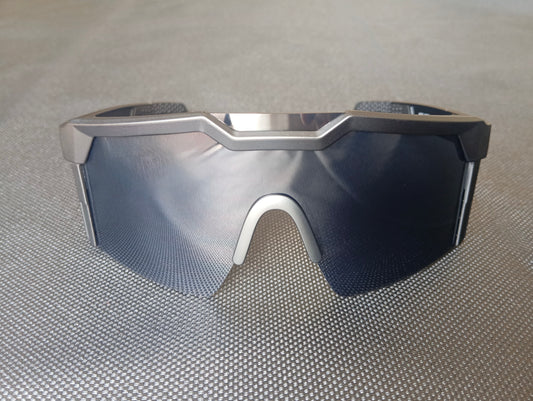
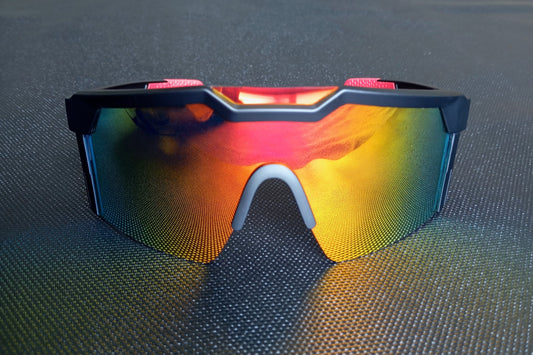
Neo Carbon : Gafas de sol de seguridad Z87
Precio habitual $65.00 USDPrecio habitual -
Neo Steel : Gafas de sol de seguridad Z87
Precio habitual $75.00 USDPrecio habitual