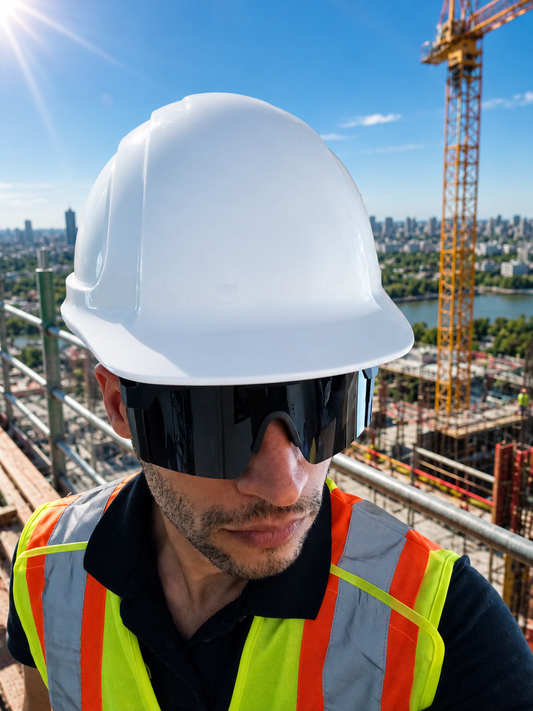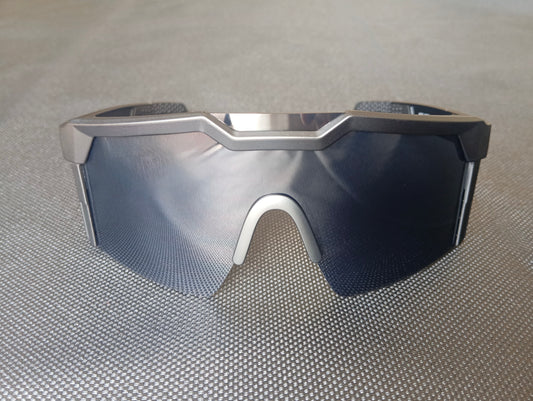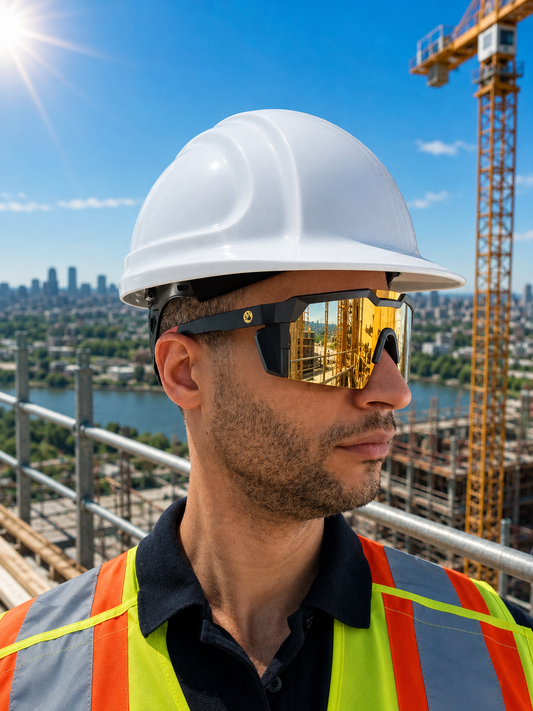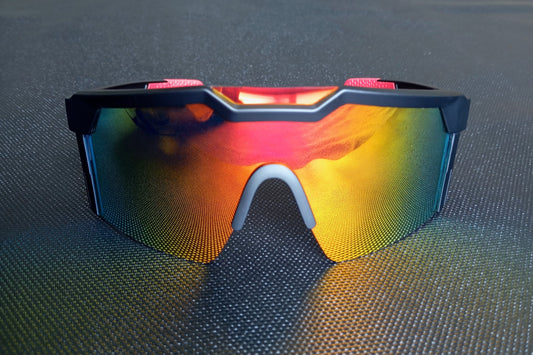
Gafas de seguridad
Elegir la protección ocular adecuada para el trabajo
Cada día, millones de trabajadores confían en su visión para realizar tareas de forma segura y eficiente. Ya sea que se trabaje en una obra de construcción, en un techo de metal, en una instalación de fabricación o al aire libre bajo la luz solar intensa, los ojos están constantemente expuestos a peligros potenciales.
Las gafas de seguridad están diseñadas para reducir el riesgo de lesiones oculares brindando protección contra impactos, escombros voladores, radiación ultravioleta (UV), polvo, productos químicos y otros peligros en el lugar de trabajo.
Esta guía explica cómo funcionan las gafas de seguridad, los diferentes tipos disponibles, cómo elegir la protección adecuada y los estándares que ayudan a garantizar un rendimiento confiable.

Por qué son importantes las gafas de seguridad
Muchas lesiones oculares en el lugar de trabajo ocurren durante tareas rutinarias que los trabajadores han realizado innumerables veces antes.
Los peligros comunes incluyen:
- partículas voladoras;
- escombros arrastrados por el viento;
- polvo;
- radiación ultravioleta;
- salpicaduras de productos químicos;
- deslumbramiento;
- ramas y vegetación;
- fragmentos de metal.
La protección ocular adecuada ayuda a preservar la visión al tiempo que mejora la comodidad y la confianza durante el trabajo.
¿Qué hace que las gafas de seguridad sean diferentes?
A diferencia de las gafas de sol comunes o las gafas de moda, las gafas de seguridad están diseñadas y probadas para resistir los riesgos laborales.
Dependiendo del modelo, las gafas de seguridad pueden proporcionar:
- resistencia al impacto;
- protección lateral;
- filtración ultravioleta;
- claridad óptica;
- resistencia al rayado;
- rendimiento antivaho.
El nivel de protección depende del diseño y de la norma de seguridad aplicable.
Tipos de gafas de seguridad
Los diferentes entornos de trabajo requieren diferentes formas de protección ocular.
Gafas de seguridad
Las gafas de seguridad son el tipo más común de protección ocular.
Son adecuados para muchas aplicaciones donde los riesgos de impacto son relativamente bajos y una buena ventilación es beneficiosa.
Los usos típicos incluyen:
- techado;
- construcción;
- mantenimiento;
- paisajismo;
- almacenamiento.

Gafas de seguridad
Las gafas de seguridad proporcionan una barrera sellada o parcialmente sellada alrededor de los ojos.
Se utilizan comúnmente cuando los trabajadores enfrentan:
- salpicaduras de productos químicos;
- polvo pesado;
- partículas finas en el aire;
- aerosoles líquidos.
Debido a que rodean el ojo, las gafas generalmente brindan una mayor cobertura que las gafas de seguridad.
Escudos faciales
Los protectores faciales protegen toda la cara de peligros mayores como:
- astillas voladoras;
- chispas;
- materiales fundidos;
- salpicaduras de líquido.
Generalmente se debe usar un protector facial. con gafas o gafas de seguridad adecuadas, no como sustitutos de las mismas.
Elegir la lente adecuada
La selección de lentes depende del entorno de trabajo.
Lentes transparentes
Las lentes transparentes maximizan la transmisión de luz y se usan comúnmente:
- en el interior;
- durante el trabajo nocturno;
- en condiciones de poca luz;
- en almacenes.
Lentes tintadas
Las lentes tintadas reducen el brillo y mejoran el confort visual.
Son muy adecuados para:
- roofing;
- instalación solar;
- agricultura;
- trabajos marítimos;
- construcción al aire libre.
Los lentes polarizados pueden ayudar a reducir la fatiga ocular causada por la exposición prolongada a la luz solar.

Lentes polarizadas
Las lentes polarizadas reducen el resplandor reflejado en superficies planas como:
- agua;
- metal pintado;
- parabrisas de vehículos.
Mejoran la comodidad visual en algunos entornos, pero pueden no ser apropiados para todas las tareas, especialmente cuando es importante leer pantallas digitales o identificar las condiciones de la superficie.
Una evaluación de riesgos específica del trabajo debe guiar la selección de lentes.
Lentes fotocromáticas
Las lentes fotocromáticas se oscurecen automáticamente con la luz del sol y se vuelven más claras con poca luz.
Estas lentes pueden resultar útiles para trabajadores que se mueven con frecuencia entre ambientes interiores y exteriores.
Protección UV
Los trabajadores al aire libre pueden recibir una exposición significativa a los rayos ultravioleta durante muchos años.
Las gafas de seguridad de calidad deben bloquear la dañina radiación UVA y UVB.
Los trabajadores expuestos a la luz solar durante períodos prolongados incluyen:
- techadores;
- instaladores solares;
- trabajadores de servicios públicos;
- agricultores;
- topógrafos;
- trabajadores marinos.
La protección UV ayuda a reducir la exposición acumulativa que puede contribuir a enfermedades oculares a largo plazo.
Recubrimientos de lentes
Las gafas de seguridad modernas suelen incluir revestimientos especializados.
Recubrimientos antirrayas
Ayuda a mantener la claridad óptica y prolonga la vida útil de las lentes.
Recubrimientos antivaho
Reducir el empañamiento causado por:
- humedad;
- cambios de temperatura;
- esfuerzo físico;
- respiradores o cubiertas para la cara.
Estos recubrimientos pueden mejorar la visibilidad y reducir la tentación de quitarse la protección ocular.
Recubrimientos hidrofóbicos
Algunas lentes repelen el agua, lo que las hace útiles en ambientes húmedos al mejorar la visibilidad y reducir las gotas de agua en la superficie de la lente.
Diseño y cobertura del marco.
Una lente protectora sólo es eficaz si los peligros no pueden alcanzar fácilmente el ojo que la rodea.
Las características del marco pueden incluir:
- diseños envolventes;
- escudos laterales integrados;
- puentes nasales ajustables;
- templos flexibles;
- construcción ligera.
La cobertura adecuada es especialmente importante en ambientes ventosos o polvorientos.
Comodidad y ajuste
Es más probable que los trabajadores usen protección para los ojos de manera constante cuando les queda bien.
Un buen ajuste debería:
- permanecer estable durante el movimiento;
- evitar puntos de presión excesiva;
- proporcionar un campo de visión claro;
- ser compatible con protección auditiva y cascos.
Es menos probable que se usen correctamente las gafas que son incómodas o que se salen constantemente de su posición.
Gafas de seguridad graduadas
Los trabajadores que requieren lentes correctivos deben evitar el uso de anteojos recetados comunes como única protección en ambientes peligrosos.
Las gafas de seguridad graduadas combinan la corrección de la visión con un rendimiento protector certificado.
Alternativamente, las gafas de seguridad (OTG) pueden ser adecuadas para algunas aplicaciones.
Estándares de protección ocular
Las gafas de seguridad deben cumplir con las normas aplicables en la región donde se utilizan.
Los estándares comunes incluyen:
ANSI/ISEA Z87.1 (Estados Unidos)
Especifica los requisitos de resistencia al impacto, calidad óptica, cobertura y marcado de dispositivos de protección ocular y facial ocupacional.
CSA Z94.3 (Canadá)
Proporciona requisitos para protectores oculares y faciales utilizados en entornos ocupacionales.
EN ISO 16321 (Europa)
Define los requisitos de desempeño para la protección personal ocular y facial utilizada en entornos ocupacionales.
Verifique siempre que las gafas seleccionadas sean apropiadas para los peligros específicos identificados en la evaluación de riesgos en el lugar de trabajo.
Inspección y mantenimiento
Las gafas protectoras deben inspeccionarse antes de cada uso.
Reemplace los anteojos si tiene:
- lentes agrietados;
- rasguños profundos;
- marcos dañados;
- protectores laterales sueltos;
- correas o sellos desgastados.
Limpie las lentes con regularidad utilizando productos recomendados por el fabricante para preservar el rendimiento óptico.
Guarde los anteojos en un estuche protector cuando no los use para reducir el uso innecesario.
Integración de la protección ocular en un programa de seguridad
Las gafas de seguridad son más efectivas cuando se combinan con otras medidas de seguridad en el lugar de trabajo, que incluyen:
- evaluaciones de peligros;
- protectores de máquinas;
- procedimientos de trabajo seguros;
- formación de trabajadores;
- inspecciones periódicas del equipo.
La protección ocular debe verse como un componente de una estrategia de seguridad integral.
Preguntas frecuentes
¿Se consideran gafas de sol normales gafas de seguridad?
No.
Aunque muchas gafas de sol bloquean la radiación ultravioleta, generalmente no están diseñadas ni probadas para la protección contra impactos ocupacionales.
¿Todas las gafas de seguridad brindan protección UV?
Muchos lo hacen, pero el nivel de protección UV varía según el producto.
Verifique siempre las especificaciones del fabricante.
¿Las lentes polarizadas son siempre la mejor opción?
No necesariamente.
Si bien reducen el deslumbramiento, los lentes polarizados pueden hacer que ciertas pantallas, indicadores o condiciones de la superficie sean más difíciles de ver.
La selección de lentes debe coincidir con el entorno de trabajo.
¿Cuándo se deben utilizar gafas protectoras en lugar de gafas de seguridad?
Generalmente se prefieren las gafas protectoras cuando los trabajadores se enfrentan a mucho polvo, salpicaduras de productos químicos o partículas finas en el aire que podrían entrar por los bordes de las gafas de seguridad estándar.
Conclusiones clave
- Las gafas de seguridad protegen contra impactos, radiación ultravioleta, polvo y peligros químicos.
- Diferentes peligros requieren diferentes tipos de protección ocular.
- La comodidad y el ajuste adecuado fomentan un uso constante.
- Las gafas de seguridad certificadas brindan protección más allá de las gafas de sol comunes.
- La inspección y el mantenimiento regulares ayudan a garantizar un rendimiento confiable.
- La protección ocular funciona mejor como parte de un programa integral de seguridad en el lugar de trabajo.
Referencias
Administración de Salud y Seguridad Ocupacional (OSHA) – Protección ocular y facial
https://www.osha.gov/eye-face-protection
Administración de Salud y Seguridad Ocupacional (OSHA): Estándar de equipos de protección personal
https://www.osha.gov/personal-protective-equipment
Instituto Nacional de Seguridad y Salud Ocupacional (NIOSH) – Seguridad ocular
https://www.cdc.gov/niosh/topics/eye/
Academia Estadounidense de Oftalmología – Seguridad ocular en el trabajo
https://www.aao.org/eye-health/tips-prevention/injuries
Prevenir la ceguera: seguridad ocular en el lugar de trabajo
https://preventblindness.org/workplace-eye-safety/
Centro Canadiense de Salud y Seguridad Ocupacional (CCOHS) – Protección ocular
https://www.ccohs.ca/oshanswers/prevention/ppe/eye_prot.html
Ejecutivo de Salud y Seguridad (Reino Unido) – Equipo de protección personal en el trabajo
https://www.hse.gov.uk/toolbox/ppe.htm
-
Bota MagSteel™
Precio habitual $350.00 USDPrecio habitual -
Zapato MagSteel™ Flow
Precio habitual $339.00 USDPrecio habitual -
Funda de suela manos libres
Precio habitual $50.00 USDPrecio habitual -
Neo Carbon : Gafas de sol de seguridad Z87
Precio habitual $65.00 USDPrecio habitual -
Neo Steel : Gafas de sol de seguridad Z87
Precio habitual $75.00 USDPrecio habitual