Peligros de superficies mojadas
Comprender y prevenir resbalones en condiciones húmedas
El agua es una de las causas más comunes de resbalones y pérdida de equilibrio en el lugar de trabajo.
La lluvia, la condensación, la nieve, el hielo, las operaciones de limpieza y los procesos industriales pueden crear superficies mojadas que aumentan el riesgo de accidentes.
Las condiciones de humedad afectan a muchas industrias, incluida la construcción, techado, fabricación, mantenimiento, transporte, agricultura, operaciones marinas, y energía renovable.
Comprender cómo la humedad cambia las condiciones de la superficie ayuda a los trabajadores a reconocer los peligros e implementar medidas preventivas efectivas.

Por qué las superficies mojadas se vuelven peligrosas
Una superficie seca depende de la fricción entre el calzado y la superficie para caminar.
Cuando se introduce agua, una fina capa de líquido puede reducir la fricción disponible.
Dependiendo de los materiales involucrados, el agua puede actuar como lubricante, facilitando el deslizamiento del pie.
Varios factores influyen en la tracción:
- textura superficial;
- material de la superficie;
- propiedades del calzado;
- contaminantes;
- profundidad del agua;
- velocidad al caminar.
No todas las superficies mojadas se comportan de la misma manera.
Fuentes de humedad en el lugar de trabajo
Las condiciones de humedad no siempre provienen de la lluvia.
Las fuentes comunes incluyen:
Lluvia
Las áreas de trabajo al aire libre con frecuencia se vuelven peligrosas durante o después de la precipitación.
Condensación
Las superficies frías pueden hacer que se condense la humedad del aire.
La condensación comúnmente afecta:
- estructuras metalicas;
- equipos industriales;
- techos;
- edificios de almacenamiento;
- instalaciones agrícolas.
La nieve y el hielo se derriten
La nieve derretida a menudo crea riesgos de resbalones temporales.
El agua puede volver a congelarse cuando bajan las temperaturas.
Operaciones de limpieza
Las actividades de limpieza industrial, lavado a presión y saneamiento pueden dejar mojadas las superficies para caminar.
Agua de proceso
Los equipos de fabricación, los sistemas de refrigeración y las operaciones industriales pueden generar agua en los pisos o áreas de trabajo.
rocío
La humedad de las primeras horas de la mañana puede desarrollarse en las superficies exteriores expuestas incluso sin lluvia.
Factores ambientales que aumentan el riesgo
Varias condiciones hacen que las superficies mojadas sean más peligrosas.
Cambios de temperatura
Las variaciones rápidas de temperatura pueden crear condensación o hielo.
viento
El viento puede acelerar la evaporación pero también puede transportar humedad.
Humedad
La alta humedad aumenta la probabilidad de condensación.
Sombra y luz solar limitada
Las superficies que reciben poca luz solar suelen permanecer húmedas por más tiempo.
Condensación: el peligro invisible
La condensación frecuentemente causa accidentes porque los trabajadores pueden no reconocer su presencia.
Cuando el aire cálido y húmedo entra en contacto con una superficie más fría, se forma humedad.
Este fenómeno ocurre comúnmente en:
- estructuras de acero;
- paneles de techo;
- pasarelas metálicas;
- tanques;
- equipos industriales.
La superficie puede parecer seca y al mismo tiempo proporcionar una tracción significativamente reducida.
Los trabajadores deben tener especial cuidado durante:
- primeras horas de la mañana;
- transiciones estacionales;
- clima húmedo;
- operaciones nocturnas.
Formación de hielo y ciclos de congelación y descongelación.
El congelamiento y descongelamiento repetidos crean condiciones superficiales impredecibles.
Las finas capas de hielo pueden ser difíciles de detectar.
Los ciclos de congelación y descongelación suelen afectar a:
- muelles de carga;
- escaleras exteriores;
- áreas de equipos en la azotea;
- plataformas metálicas;
- pasarelas elevadas.
El derretimiento temporal durante el día seguido de la congelación durante la noche puede crear condiciones peligrosas.
Superficies mojadas en diferentes industrias
Construcción
La lluvia y el barro afectan con frecuencia las obras de construcción.
Los pasillos temporales y las superficies sin terminar pueden volverse peligrosos.
Mantenimiento Industrial
Las fugas de agua, los sistemas de refrigeración y los fluidos de proceso pueden crear riesgos de resbalones.
agricultura
La condensación dentro de los edificios agrícolas a menudo afecta los pisos y equipos metálicos.
Operaciones marinas y de astilleros
El rocío del mar, la lluvia y la humedad exponen constantemente las superficies a la humedad.
Industrias solares y energéticas
El equipo exterior recibe mantenimiento con frecuencia en condiciones climáticas cambiantes.
Almacenamiento y Logística
Los muelles de carga y las áreas de entrada pueden mojarse debido a la exposición al clima.
Materiales de superficie y comportamiento del agua
Los diferentes materiales responden de manera diferente a la humedad.
| Superficie | Rendimiento en mojado |
|---|---|
| Acero liso | pobre |
| metal pintado | Pobre a moderado |
| Concreto | moderado |
| Hormigón texturizado | bueno |
| esteras de goma | bueno |
| Acero rallado | Moderado a bueno |
La textura de la superficie a menudo influye más en la tracción en mojado que el propio material.
Controles en el lugar de trabajo para condiciones húmedas
Mejorar el drenaje
Un drenaje adecuado evita el agua estancada.
Los ejemplos incluyen:
- desagües de techo;
- pendientes del piso;
- canales de drenaje;
- sistemas de canalones.
Retire el agua rápidamente
La acumulación de agua debe abordarse rápidamente.
Los métodos incluyen:
- escurridores;
- bombas;
- materiales absorbentes;
- sistemas de drenaje.
Mejorar la limpieza
El agua combinada con suciedad, aceite o escombros puede reducir aún más la tracción.
La limpieza regular ayuda a mantener condiciones seguras.
Restringir el acceso
Es posible que se necesiten barreras temporales y señales de advertencia durante condiciones peligrosas.
Programe el trabajo adecuadamente
Algunas tareas pueden posponerse hasta que mejoren las condiciones.
Los pronósticos meteorológicos pueden ayudar a la planificación.
Consideraciones sobre el calzado
El rendimiento del calzado puede variar considerablemente en condiciones de humedad.
Las características importantes incluyen:
- flexibilidad única;
- compuesto de caucho;
- geometría de la banda de rodadura;
- área de contacto;
- compatibilidad de superficies.
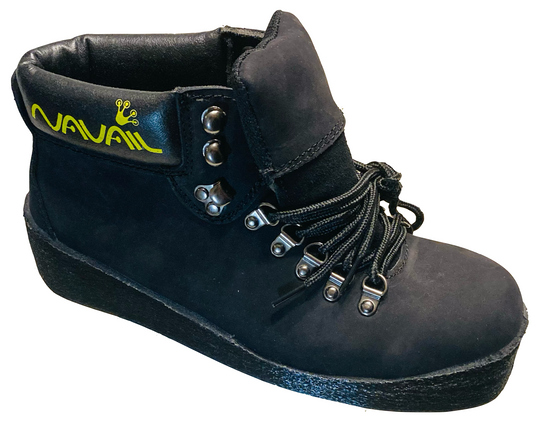
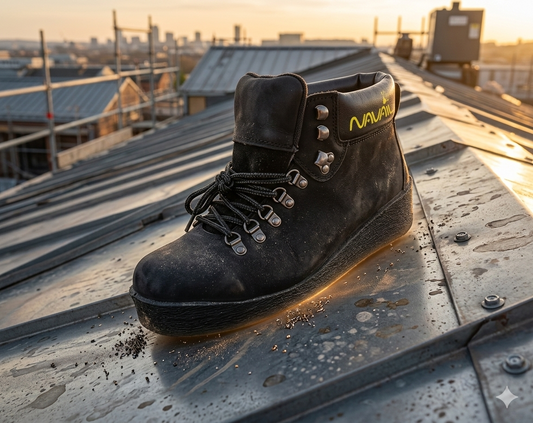
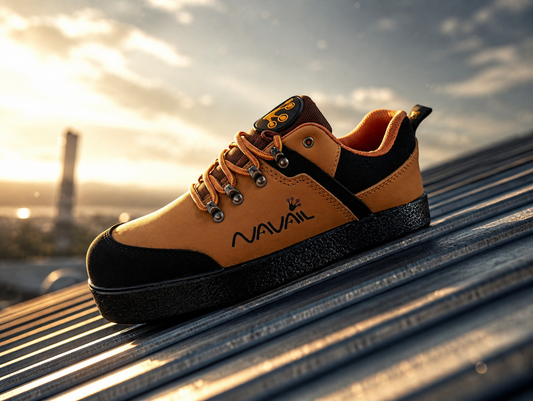
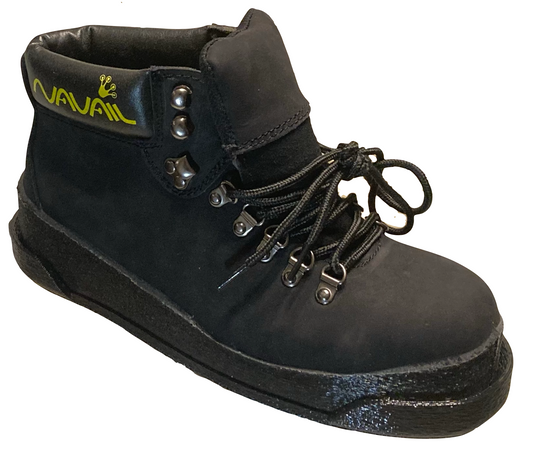
Los entornos de trabajo con paneles de acero requieren tecnologías de calzado magnético Diseñado para superficies metálicas.
Seleccionar calzado apropiado para el entorno de trabajo puede mejorar significativamente la estabilidad.
Evaluación de riesgos para condiciones húmedas
Antes de comenzar a trabajar, los trabajadores deben evaluar:
- condiciones climáticas;
- material de superficie;
- fuente de humedad;
- condiciones de drenaje;
- visibilidad;
- equipo disponible.
Las preguntas que debe hacer incluyen:
- ¿Es visible la humedad?
- ¿Podrían cambiar las condiciones durante el trabajo?
- ¿Se requieren controles adicionales?
- ¿Es posible posponer el trabajo?
Orientación internacional
Muchas normas de seguridad ocupacional exigen que los empleadores identifiquen y controlen los riesgos de resbalones.
Las evaluaciones de riesgos a menudo incluyen:
- condiciones ambientales;
- limpieza;
- diseño del lugar de trabajo;
- formación de trabajadores.
Generalmente se hace más hincapié en la prevención que en el equipo de protección personal.
Preguntas frecuentes
¿Las superficies mojadas son siempre peligrosas?
No.
El nivel de riesgo depende de la superficie, los contaminantes, el calzado y las condiciones ambientales.
¿Por qué es peligrosa la condensación?
La condensación puede ser difícil de detectar y puede reducir significativamente la tracción.
¿Es la lluvia más peligrosa que el rocío?
No necesariamente.
Las películas finas de humedad a veces pueden proporcionar menos tracción que una acumulación de agua más intensa.
¿Puede el calzado mejorar la seguridad en superficies mojadas?
Sí.
Calzado adecuado Puede mejorar la estabilidad y la tracción en condiciones húmedas.
Conclusiones clave
- El agua reduce la tracción en muchas superficies.
- La condensación es un peligro que con frecuencia se pasa por alto.
- Las fuentes de humedad se extienden más allá de la lluvia.
- La textura de la superficie influye fuertemente en la resistencia al deslizamiento.
- Las condiciones ambientales pueden cambiar rápidamente los niveles de riesgo.
- Una adecuada planificación y gestión de superficies mejora la seguridad.
Referencias
Instituto Nacional de Seguridad y Salud Ocupacional (NIOSH)
Resbalones, tropezones y caídas:
https://www.cdc.gov/niosh/topics/falls/
Administración de Salud y Seguridad Ocupacional (OSHA)
Superficies para caminar y trabajar:
https://www.osha.gov/walking-working-surfaces
Centro Canadiense de Salud y Seguridad Ocupacional
Resbalones, tropezones y caídas:
https://www.ccohs.ca/oshanswers/safety_haz/slips.html
Ejecutivo de Salud y Seguridad (Reino Unido)
Resbalones y Tropiezos:
https://www.hse.gov.uk/slips/
Trabajo seguro Australia
Manejo del riesgo de caídas:
https://www.safeworkaustralia.gov.au/doc/model-code-practice-managing-risk-falls-workplaces
Consejo Nacional de Seguridad
Prevención de resbalones, tropezones y caídas:
https://www.nsc.org/workplace/safety-topics/slips-trips-falls
-
Bota MagSteel™
Precio habitual $350.00 USDPrecio habitual -
Zapato MagSteel™ Flow
Precio habitual $339.00 USDPrecio habitual -
Funda de suela manos libres
Precio habitual $50.00 USDPrecio habitual -
Neo Carbon : Gafas de sol de seguridad Z87
Precio habitual $65.00 USDPrecio habitual -
Neo Steel : Gafas de sol de seguridad Z87
Precio habitual $75.00 USDPrecio habitual