Seguridad en el lugar de trabajo de Canadá
Regulaciones, Protección contra Caídas y Estándares OH&S
La seguridad en el lugar de trabajo en Canadá se rige por una combinación de orientación federal, leyes provinciales de salud y seguridad ocupacional (OH&S) y estándares nacionales desarrollados por el Grupo CSA.
A diferencia del Estados Unidos (OSHA) o el Unión Europea (marco EU-OSHA), Canadá utiliza un sistema descentralizado, donde cada provincia y territorio hace cumplir sus propias normas de seguridad.
Sin embargo, la mayoría de las regiones siguen principios similares basados en estándares nacionales comunes y orientación del Centro Canadiense de Salud y Seguridad Ocupacional (CCOHS).

El papel de CCOHS en Canadá
el Centro Canadiense de Salud y Seguridad Ocupacional (CCOHS) es el principal recurso nacional de Canadá para obtener información sobre seguridad en el lugar de trabajo.
CCOHS proporciona:
- pautas de seguridad y mejores prácticas;
- recursos de identificación de peligros;
- materiales de formación;
- recomendaciones de seguridad basadas en investigaciones;
- acceso público a los datos de salud ocupacional.
📌 Sitio web oficial:
https://www.ccohs.ca/
CCOHS no hace cumplir las leyes, pero apoya a los empleadores, trabajadores y reguladores.
Sistemas Provinciales y Territoriales OH&S
Las leyes de seguridad en el lugar de trabajo se aplican en el nivel provincial y territorial.
Cada jurisdicción tiene su propio organismo regulador, como por ejemplo:
| Región | autoridad |
|---|---|
| ontario | Ministerio de Trabajo, Inmigración, Formación y Desarrollo de Capacidades |
| Columbia Británica | TrabajoSeguraBC |
| Alberta | Salud y seguridad ocupacional de Alberta |
| Quebec | CNESST |
| Lugares de trabajo federales | Empleo y Desarrollo Social de Canadá (ESDC) |
A pesar de las diferencias, la mayoría de las regulaciones están alineadas en cuanto a estructura y principios de aplicación.
Normas CSA para protección contra caídas
Canadá depende en gran medida de Estándares del grupo CSA, especialmente para sistemas de protección contra caídas.
El estándar más importante es:
CSA Z259 – Sistemas de protección contra caídas
Esta norma cubre:
- diseño y rendimiento del arnés;
- absorbentes de energía;
- cordones y cuerdas de salvamento;
- sistemas de anclaje;
- requisitos del sistema de detención de caídas;
- procedimientos de inspección y prueba.
📌 Descripción general de los estándares del grupo CSA:
https://www.csagroup.org/
Requisitos de protección contra caídas en Canadá
Protección contra caídas Las reglas varían ligeramente según la provincia, pero generalmente se aplican cuando los trabajadores están expuestos a:
- alturas de 3 metros (10 pies) o más en muchas jurisdicciones;
- bordes desprotegidos;
- trabajo de techo;
- andamios y plataformas elevadas;
- Estructuras industriales y armazones de acero.
Los sistemas requeridos comunes incluyen:
- barandillas;
- sistemas de retención de viajes;
- sistemas personales de detención de caídas (PFAS);
- Redes de seguridad (en aplicaciones específicas).
Trabajo en altura en las industrias canadienses
Las regulaciones canadienses sobre trabajos en altura se aplican en industrias como:
- techado y construcción;
- instalación solar;
- construcción naval y trabajos marítimos;
- estructuras industriales de acero;
- torres de telecomunicaciones;
- mantenimiento del sector energético (eólico, hidro, petróleo & gas).
Cada industria debe realizar un evaluación de riesgos antes de comenzar el trabajo.
Requisitos de PPE en Canadá
Los empleadores deben proporcionar PPE según los peligros identificados.
El PPE común incluye:
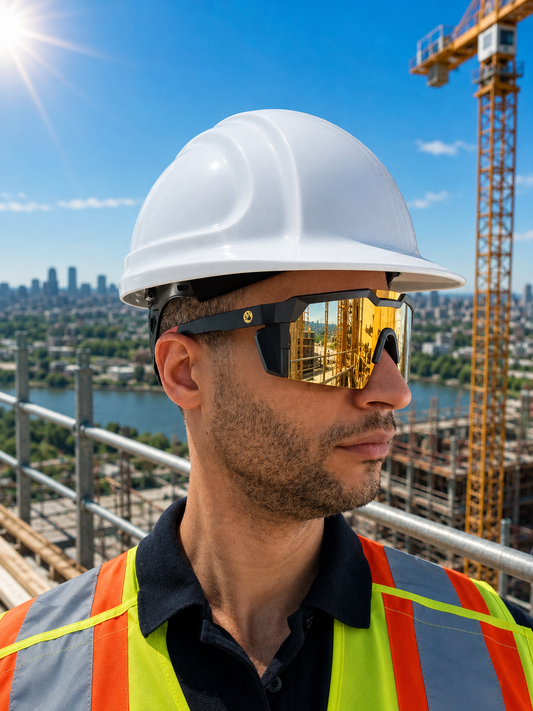
- protección para la cabeza (cascos homologados CSA);
- protección para los ojos y la cara;
- guantes resistentes a cortes;
- calzado de seguridad (Estándar CSA Z195);
- protección contra caídas arneses;
- ropa de alta visibilidad.
📌 Norma de calzado CSA:
https://www.csagroup.org/standards/
PPE debe ser:
- apropiado para el peligro;
- correctamente instalado;
- mantenido e inspeccionado periódicamente;
- Utilizado según el entrenamiento.
CSA Z259 y sistemas de detención de caídas
CSA Z259 es una de las estructuras más importantes para trabajos en altura de alto riesgo.
Define:
- requisitos mínimos de resistencia para el equipo;
- desempeño dinámico en condiciones de caída;
- compatibilidad entre los componentes del sistema;
- intervalos de inspección;
- Expectativas de formación de los usuarios.
Se hace referencia ampliamente a esta norma en todas las provincias canadienses.
Seguridad de escaleras y accesos en Canadá
Las escaleras están reguladas por las leyes provinciales OH&S pero siguen principios comunes:
- selección adecuada de escaleras para la tarea;
- colocación segura en superficies estables;
- mantener tres puntos de contacto;
- inspección antes de su uso;
- evitar la extralimitación y la inestabilidad;
- uso de protección contra caídas cuando sea necesario.
Regulaciones de trabajo en techos en Canadá
techado Se considera una actividad de alto riesgo en todas las provincias.
Los requisitos clave incluyen:
- protección contra caídas sistemas por encima de los umbrales de altura regulados;
- barandillas o sistemas PFAS;
- puntos de acceso controlados;
- formación de trabajadores;
- evaluaciones de peligros antes de comenzar el trabajo.
La nieve, el hielo y las condiciones climáticas estacionales influyen significativamente en la planificación de la seguridad en Canadá.
Factores climáticos y ambientales
Canadá presenta riesgos ambientales únicos debido a la variabilidad climática.
Los factores clave incluyen:
- acumulación de nieve y hielo en las superficies;
- ciclos de congelación y descongelación que afectan la tracción;
- condiciones de fuertes vientos en áreas expuestas;
- estrés por frío y riesgo de hipotermia;
- Destreza reducida debido a las bajas temperaturas.
Estas condiciones hacen que la tracción en la superficie y la selección de PPE sean especialmente importantes.
Acceso con cuerdas y trabajos industriales en Canadá
Acceso por cuerda El trabajo en Canadá sigue estándares de la industria como:
- Certificación IRATA;
- Certificación SPRAT (sistema con base en América del Norte);
- Prácticas de seguridad alineadas con CSA.
Se utiliza comúnmente en:
- energía eólica;
- mantenimiento industrial;
- puentes e infraestructura;
- entornos marinos y marinos.
📌IRATA: https://irata.org/
📌 ESPADA: https://sprat.org/
Cultura de seguridad en Canadá
La seguridad en el lugar de trabajo canadiense enfatiza:
- prevención mediante evaluación de riesgos;
- participación de los trabajadores en los sistemas de seguridad;
- formación y desarrollo de competencias;
- fuertes sistemas provinciales de aplicación de la ley;
- Monitoreo continuo de peligros.
El sistema está diseñado para adaptarse a las diferencias regionales e industriales.
Canadá frente a otros sistemas de seguridad
| Característica | Canadá | Estados Unidos (OSHA) | Europa |
|---|---|---|---|
| Estructura | Sistema provincial | Federal OSHA | UE + leyes nacionales |
| Estándares PPE | CSA | ANSI/NIOSH | ES / CE |
| Protección contra caídas | CSA Z259 | OSHA 1926 | EN 363 / EN 361 |
| Aplicación | Agencias provinciales | agencia federal | Reguladores nacionales |
Conclusiones clave
- Canadá utiliza un sistema provincial descentralizado OH&S.
- CCOHS proporciona orientación de seguridad nacional pero no hace cumplir las leyes.
- CSA Z259 es el estándar clave para los sistemas de protección contra caídas.
- Los requisitos de protección contra caídas varían ligeramente según la provincia, pero en términos generales están alineados.
- Las condiciones ambientales (nieve, hielo, frío) afectan significativamente a la seguridad.
- PPE debe cumplir con los estándares CSA para su cumplimiento.
Referencias
Centro Canadiense de Salud y Seguridad Ocupacional (CCOHS)
https://www.ccohs.ca/
Estándares del grupo CSA
https://www.csagroup.org/
Ministerio de Trabajo de Ontario OH&S
https://www.ontario.ca/page/health-and-safety-work
TrabajoSeguraBC
https://www.worksafebc.com/
CNESST Quebec
https://www.cnesst.gouv.qc.ca/
Empleo y Desarrollo Social de Canadá (ESDC)
https://www.canada.ca/en/employment-social-development.html
IRATA Internacional
https://irata.org/
Estándares de acceso con cuerdas SPRAT
https://sprat.org/
-
Bota MagSteel™
Precio habitual $350.00 USDPrecio habitual -
Zapato MagSteel™ Flow
Precio habitual $339.00 USDPrecio habitual -
Funda de suela manos libres
Precio habitual $50.00 USDPrecio habitual -
Neo Carbon : Gafas de sol de seguridad Z87
Precio habitual $65.00 USDPrecio habitual -
Neo Steel : Gafas de sol de seguridad Z87
Precio habitual $75.00 USDPrecio habitual