Safety Footwear
Choosing the Right Protection for Every Workplace
Safety footwear is one of the most important forms of personal protective equipment (PPE). Properly selected footwear helps protect workers from impacts, punctures, slips, electrical hazards, chemicals, and other workplace risks while providing the support needed for long hours on the job.
Modern safety footwear is available in many designs, from lightweight safety shoes to heavy-duty industrial boots. No single model is suitable for every environment, making hazard assessment an essential first step in selecting appropriate footwear.
This guide explains the main types of safety footwear, their protective features, and how to choose the right option for different industries and working conditions.

Why Safety Footwear Matters
Feet support every movement a worker makes. An injury can reduce mobility, affect balance, and increase the likelihood of secondary accidents, particularly when working at height or on uneven surfaces.
Safety footwear helps reduce the risk of injuries caused by:
- falling or rolling objects;
- sharp debris and punctures;
- slippery surfaces;
- electrical hazards;
- hot materials;
- chemical exposure;
- repetitive physical strain.
For an overview of these risks, see Workplace Foot Injuries.
Start with a Workplace Risk Assessment
The best safety footwear is the one that matches the hazards present in a specific work environment.
Consider questions such as:
- Are heavy objects handled regularly?
- Are sharp materials present on the ground?
- Is there a risk of electrical contact?
- Are floors wet, oily, or slippery?
- Is the work performed indoors or outdoors?
- Is prolonged standing or walking required?
The answers determine which protective features are necessary.
Protective Toe Caps
Toe caps are designed to reduce injuries caused by falling or rolling objects.
The two most common options are:
Steel Toe
Steel toe caps provide excellent impact and compression protection and remain widely used in construction, manufacturing, and heavy industry.
Advantages:
- high durability;
- compact design;
- proven performance.
Considerations:
- heavier than composite materials;
- may conduct heat and cold more readily.
Composite Toe
Composite toe caps are manufactured from non-metallic materials such as fiberglass, carbon fiber, or reinforced polymers.
Advantages:
- lighter weight;
- non-metallic construction;
- reduced thermal conductivity;
- suitable where metal detectors are used.
Protection levels are comparable to certified steel toe footwear when tested to applicable standards.
Puncture-Resistant Midsoles
Sharp objects on the ground can penetrate ordinary footwear.
Puncture-resistant midsoles help protect against hazards such as:
- nails;
- screws;
- metal fragments;
- broken glass.
Depending on the application, midsoles may be manufactured from:
- steel;
- high-strength textile materials;
- advanced composite fabrics.
Slip Resistance
Maintaining traction is essential for reducing slips and falls.
Slip-resistant outsoles are designed to improve grip on surfaces such as:
- concrete;
- tile;
- wood;
- industrial flooring.
Performance depends on many factors, including surface condition, contamination, and tread design.
For specialized environments such as steel structures and metal roofs, additional traction technologies may be appropriate.
Learn more:
Electrical Protection
Some workplaces require footwear with electrical protective properties.
Common categories include:
Electrical Hazard (EH)
Designed to provide additional insulation against accidental contact with energized electrical circuits under specified test conditions.
Typical applications:
- construction;
- utilities;
- electrical maintenance.
Antistatic Footwear
Designed to reduce the accumulation of static electricity while maintaining a controlled electrical resistance.
Often used in:
- electronics manufacturing;
- industrial facilities;
- logistics.
Conductive Footwear
Allows static electricity to dissipate quickly where electrostatic discharge presents a greater hazard than electrical shock.
Used only in specialized environments.
Waterproof and Weather Protection
Outdoor workers may encounter:
- rain;
- snow;
- mud;
- standing water;
- freezing temperatures.
Waterproof membranes and water-resistant materials help maintain comfort while reducing exposure to cold and moisture.
However, waterproof construction should also allow sufficient breathability to reduce heat buildup during extended use.
Comfort and Ergonomics
Protective features should not come at the expense of comfort.
Factors that influence comfort include:
- footwear weight;
- cushioning;
- flexibility;
- arch support;
- fit;
- breathability;
- shock absorption.
Comfort encourages consistent PPE use and may reduce fatigue during long work shifts.
Industry-Specific Footwear Needs
Different industries often require different combinations of protective features.
| Industry | Typical Footwear Features |
|---|---|
| Roofing | Slip resistance, stability, lightweight construction |
| Solar Installation | Slip resistance, electrical considerations, comfort |
| Shipbuilding | Slip resistance, puncture resistance, corrosion-resistant materials |
| Manufacturing | Toe protection, puncture resistance, durability |
| Warehousing | Toe protection, comfort, slip resistance |
| Electrical Work | EH-rated footwear where appropriate |
International Safety Footwear Standards
Safety footwear is certified under different standards around the world.
United States
ASTM F2413 specifies performance requirements for protective footwear, including impact, compression, puncture resistance, and electrical hazard testing.
Europe
EN ISO 20345 establishes minimum requirements for safety footwear, including toe protection and optional features such as puncture resistance, waterproofing, and slip resistance.
Canada
CSA Z195 defines protective footwear requirements for Canadian workplaces.
Australia and New Zealand
AS/NZS 2210 specifies safety footwear performance requirements.
Workers should always follow the standards applicable in their jurisdiction.
Inspection and Replacement
Safety footwear should be inspected before use.
Look for:
- excessive sole wear;
- damaged toe caps;
- cuts or cracks;
- loose stitching;
- damaged laces or closures;
- signs of puncture or compression damage.
Footwear that no longer provides adequate protection should be replaced.
Frequently Asked Questions
Are heavier boots always safer?
Not necessarily. Appropriate protection depends on the hazards present. Lightweight footwear that meets the required safety standards may provide equivalent protection while improving comfort.
Can one pair of safety boots protect against every hazard?
No. Different workplaces require different protective features. Hazard assessment should guide footwear selection.
Do all safety boots provide puncture protection?
No. Only footwear specifically designed and certified with puncture-resistant midsoles offers this protection.
Is specialized footwear available for steel structures?
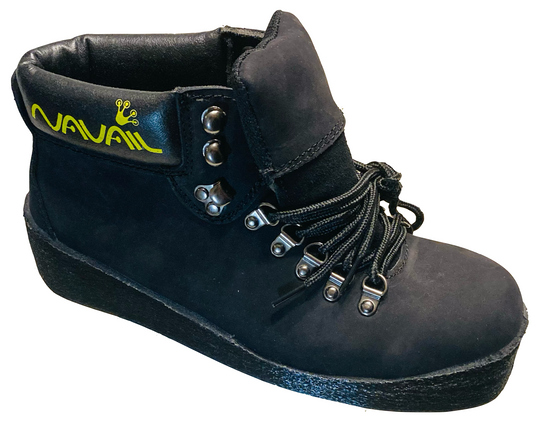
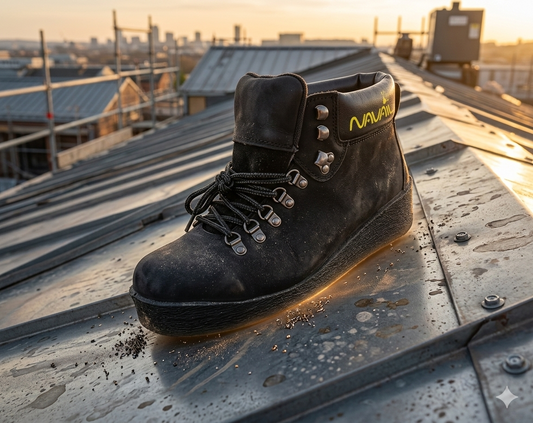
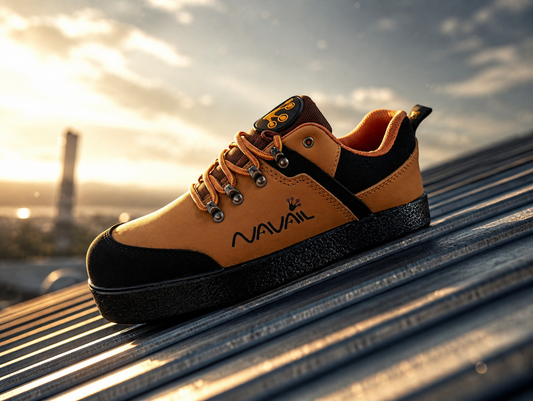
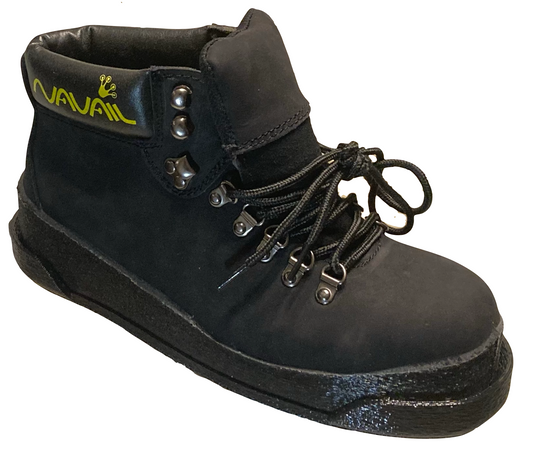
Yes. Certain work environments require specialized traction technologies designed for ferromagnetic surfaces. One example is magnetic footwear, which can provide additional stability on compatible steel structures.
Key Takeaways
- Safety footwear should be selected based on a workplace risk assessment.
- Different hazards require different protective features.
- International standards help ensure minimum performance requirements.
- Comfort and proper fit encourage consistent use.
- Specialized work environments may benefit from footwear designed for their specific operating conditions.
References
Occupational Safety and Health Administration (OSHA) – Personal Protective Equipment
https://www.osha.gov/personal-protective-equipment
OSHA – Foot Protection (29 CFR 1910.136)
https://www.osha.gov/laws-regs/regulations/standardnumber/1910/1910.136
National Institute for Occupational Safety and Health (NIOSH) – Workplace Safety
https://www.cdc.gov/niosh/
European Agency for Safety and Health at Work (EU-OSHA)
https://osha.europa.eu/
EN ISO 20345 – Safety Footwear Overview
https://www.iso.org/
ASTM International – ASTM F2413 Protective Footwear
https://www.astm.org/f2413
Canadian Centre for Occupational Health and Safety (CCOHS) – Safety Footwear
https://www.ccohs.ca/oshanswers/prevention/ppe/footwear.html
CSA Group – CSA Z195 Protective Footwear
https://www.csagroup.org/
Standards Australia – AS/NZS 2210 Safety Footwear
https://www.standards.org.au/
-
MagSteel™ Boot
Regular price $350.00 USDRegular price -
MagSteel™ Flow Shoe
Regular price $339.00 USDRegular price -
Hands free sole cover
Regular price $50.00 USDRegular price -
Neo Carbon™ Black Safety Sunglasses | ANSI Z87 & UV400
Regular price $65.00 USDRegular price -
Neo Steel™ Mirror Safety Sunglasses | ANSI Z87 & Anti-Glare UV400
Regular price $75.00 USDRegular price