Europe workplace safety
Regulations, Standards and Work at Height Requirements
Workplace safety in Europe is governed by a combination of European Union directives, harmonised standards (EN/ISO), and national regulations.
Unlike the United States OSHA system, Europe does not rely on a single unified enforcement body. Instead, safety rules are built on a framework that is implemented by each member state.
Despite this, the core principles are consistent across the EU:
- prevent workplace accidents;
- reduce exposure to hazards;
- standardise PPE requirements;
- regulate work at height;
- ensure employer responsibility for risk management.

The Role of EU-OSHA
The European Agency for Safety and Health at Work (EU-OSHA) is the central body responsible for collecting, analysing, and promoting workplace safety best practices across Europe.
EU-OSHA does not enforce laws directly, but it supports:
- harmonisation of safety approaches;
- research on workplace risks;
- awareness campaigns;
- guidance for employers and workers.
📌 Official EU-OSHA website:
https://osha.europa.eu/
European Legal Framework for Workplace Safety
The foundation of EU workplace safety is based on the EU Framework Directive 89/391/EEC.
This directive establishes the general principles of prevention and applies to all sectors.
Key obligations include:
- risk assessment before work begins;
- prevention of workplace hazards;
- training and instruction for workers;
- provision of appropriate PPE;
- maintenance of safe equipment and systems;
- employer responsibility for safety outcomes.
📌 Official directive text:
https://eur-lex.europa.eu/legal-content/EN/TXT/?uri=CELEX:31989L0391
Work at Height Regulations in Europe
Work at height is regulated through multiple EU directives and national laws.
The core principle across Europe is:
Work at height must be avoided whenever possible, and when unavoidable, risks must be minimized.
Common requirements include:
- use of collective protection (guardrails, scaffolding);
- fall prevention before fall arrest;
- proper access systems (ladders, stairs);
- training for workers exposed to height risks;
- inspection of equipment before use.
PPE Regulation in Europe (EU Regulation 2016/425)
Personal Protective Equipment in Europe is regulated under:
EU Regulation 2016/425
This regulation defines:
- PPE classification (Category I, II, III);
- conformity assessment procedures;
- CE marking requirements;
- manufacturer obligations;
- market surveillance rules.
📌 Official PPE regulation:
https://eur-lex.europa.eu/eli/reg/2016/425/oj
CE Marking and Safety Equipment
Any PPE sold in the EU must carry a CE mark, indicating compliance with European safety standards.
CE marking ensures:
- product safety testing;
- compliance with harmonised EN standards;
- traceability of manufacturing;
- conformity with EU law.
For high-risk PPE (Category III), such as:
- fall arrest systems;
- harnesses;
- respiratory protection;
additional certification and ongoing quality control are required.
EN Standards for Work at Height
Europe uses harmonised EN standards to define technical safety requirements.
Key standards include:
EN 361 – Full Body Harnesses
Defines requirements for harnesses used in fall arrest systems.
EN 363 – Fall Protection Systems
Covers the full system including anchors, connectors, and energy absorbers.
EN 795 – Anchor Devices
Specifies requirements for anchorage points used in fall protection systems.
EN 365 – Inspection and Maintenance
Defines periodic inspection requirements for PPE used in fall protection.
📌 CEN (European Committee for Standardization):
https://www.cencenelec.eu/
National Safety Authorities in Europe
Each country enforces EU directives through its own authority:
| Country | Authority |
|---|---|
| France | INRS / Ministère du Travail |
| Germany | BAuA |
| United Kingdom | HSE |
| Spain | INSST |
| Italy | INAIL |
| Netherlands | Inspectorate SZW |
Despite differences, all follow EU harmonisation principles.
Work at Height Across Europe
Work at height regulations apply to industries such as:
- roofing and construction;
- solar installation;
- wind energy;
- steel structure maintenance;
- shipbuilding and offshore work;
- rope access operations.
Common requirements include:
- risk assessment before work;
- preference for collective protection;
- certified fall protection systems;
- trained personnel;
- rescue planning.
Rope Access and European Standards
Rope access in Europe is commonly governed by:
- IRATA standards (industry-led);
- EN 12841 (rope access systems);
- EN 1891 (low-stretch ropes).
These standards ensure:
- redundancy in rope systems;
- controlled descent/ascent systems;
- certified technician levels;
- rescue capability requirements.
📌 IRATA: https://irata.org/
PPE Requirements in European Workplaces
Employers must provide PPE that:
- is appropriate for identified risks;
- is properly CE marked;
- fits the worker correctly;
- is maintained and replaced when necessary;
- is accompanied by training.
Workers must:
- use PPE correctly;
- report defects;
- follow safety instructions.
Safety Culture in Europe
European workplace safety emphasizes:
- prevention over reaction;
- collective protection over individual PPE;
- continuous risk assessment;
- structured training systems;
- documentation and compliance.
This approach is especially visible in high-risk industries such as construction, energy, and maritime work.
Europe vs Other Regulatory Systems
| Feature | Europe | OSHA (USA) |
|---|---|---|
| Structure | Decentralized (EU + national laws) | Centralized federal system |
| PPE | CE marking required | ANSI/NIOSH standards |
| Standards | EN harmonised standards | OSHA regulations |
| Enforcement | National authorities | Federal agency |
Both systems share the same goal: reducing workplace injuries and fatalities.
Key Takeaways
- Europe uses a harmonised but decentralized safety system.
- EU-OSHA provides guidance, not enforcement.
- PPE must comply with CE marking and EU Regulation 2016/425.
- EN standards define technical requirements for safety equipment.
- Work at height is heavily regulated across all EU countries.
- Collective protection is preferred over PPE alone.
References
EU-OSHA (European Agency for Safety and Health at Work)
https://osha.europa.eu/
EU Framework Directive 89/391/EEC
https://eur-lex.europa.eu/legal-content/EN/TXT/?uri=CELEX:31989L0391
EU PPE Regulation 2016/425
https://eur-lex.europa.eu/eli/reg/2016/425/oj
CEN / CENELEC European Standards Organization
https://www.cencenelec.eu/
IRATA International Rope Access Standards
https://irata.org/
Health and Safety Executive (UK) – Work at Height
https://www.hse.gov.uk/work-at-height/
INRS France – Workplace Safety
https://www.inrs.fr/
-
MagSteel™ Boot
Regular price $350.00 USDRegular price -
MagSteel™ Flow Shoe
Regular price $339.00 USDRegular price -
Hands free sole cover
Regular price $50.00 USDRegular price -
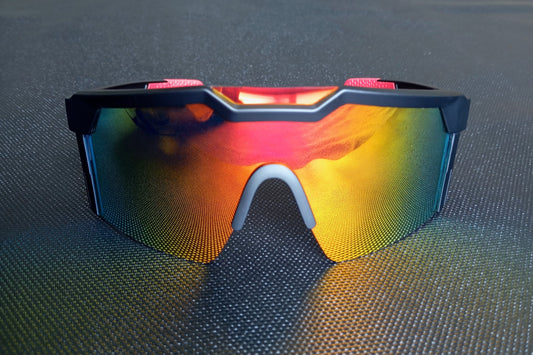
Neo Carbon™ Black Safety Sunglasses | ANSI Z87 & UV400
Regular price $65.00 USDRegular price -
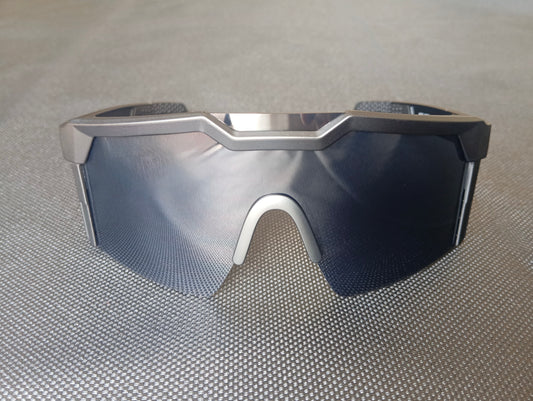
Neo Steel™ Mirror Safety Sunglasses | ANSI Z87 & Anti-Glare UV400
Regular price $75.00 USDRegular price