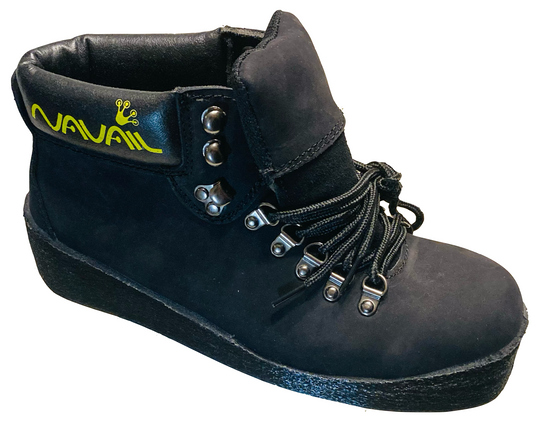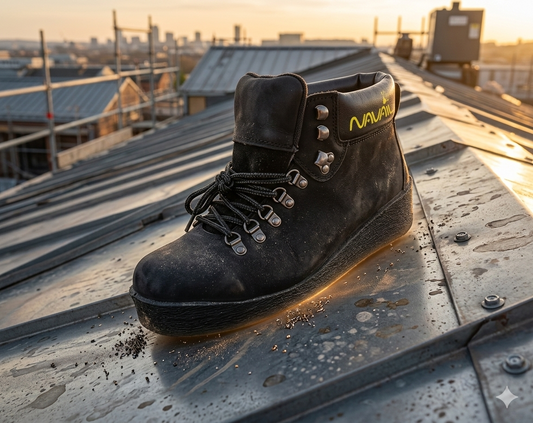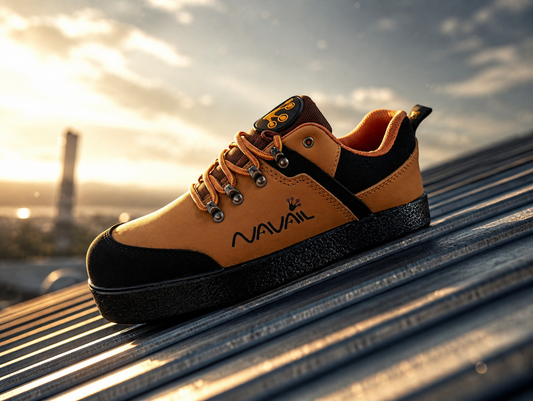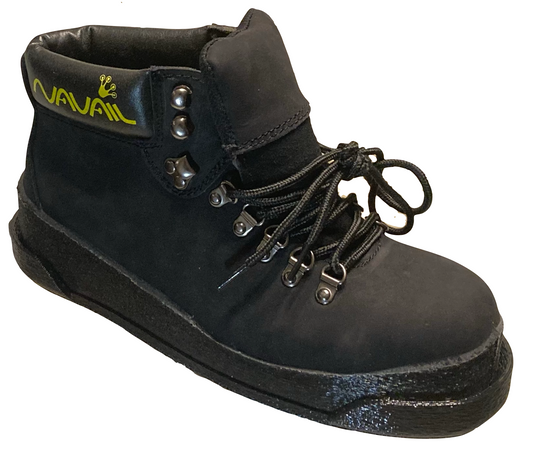
Chaussures magnétiques
Comment les bottes de sécurité magnétiques améliorent la traction sur les surfaces en acier
Travailler sur toits en acier et d'autres structures ferromagnétiques présentent des défis uniques. Les surfaces métalliques lisses, l'humidité, la poussière et les pentes abruptes peuvent réduire traction et augmenter la probabilité de glisse.
Les bottes de travail traditionnelles reposent entièrement sur la friction entre la semelle extérieure et la surface de marche. Chaussures magnétiques introduit un mécanisme supplémentaire : l'attraction magnétique entre la chaussure et la surface en acier.
Ce guide explique comment les chaussures magnétiques fonctionnent, où il peut être utilisé, ses avantages et ses limites, et comment il s'intègre dans une stratégie globale de prévention des chutes.

Qu’est-ce que les chaussures magnétiques ?
Les chaussures magnétiques sont spécialisées chaussures de sécurité conçu pour être utilisé sur des surfaces ferromagnétiques telles que l'acier au carbone.
Contrairement aux bottes classiques, les chaussures magnétiques intègrent des aimants permanents dans la semelle. Ces aimants génèrent une force attractive vers la surface de l'acier, augmentant la force normale entre la semelle extérieure et le métal.
Étant donné que le frottement dépend en partie de la force normale, l’attraction magnétique peut augmenter la résistance au glissement sur des surfaces appropriées.
Les chaussures magnétiques sont destinées à améliorer la traction, sans pour autant éliminer la nécessité d'autres mesures de sécurité.
Comment fonctionnent les chaussures magnétiques ?
Les aimants permanents intégrés dans la semelle extérieure créent un champ magnétique.
Quand la botte est placé sur une surface ferromagnétique, telle qu'un panneau de toit en acier, le champ magnétique interagit avec l'acier, produisant une force d'attraction.
Cette force supplémentaire augmente la pression de contact entre la semelle et la surface.
Le résultat est :
- stabilité améliorée;
- une plus grande résistance au glissement;
- confiance accrue lors de la marche sur des surfaces en acier.
Contrairement aux dispositifs d'aspiration, les aimants ne nécessitent pas une surface parfaitement étanche et continuent de fonctionner même dans de nombreuses conditions poussiéreuses ou humides, à condition que le matériau sous-jacent soit ferromagnétique.
Pourquoi les aimants peuvent améliorer la traction
La force de frottement disponible entre deux surfaces dépend à la fois du coefficient de frottement et de la force normale agissant entre elles.
Les bottes de travail traditionnelles peuvent améliorer la traction en augmentant le coefficient de friction grâce à des composés de caoutchouc et des sculptures spécialisés.
Les chaussures magnétiques abordent le problème différemment.
Plutôt que de modifier le coefficient de friction, les aimants augmentent la force qui appuie la semelle contre la surface en acier.
Cette force de contact supplémentaire peut augmenter la force de friction maximale disponible avant que le glissement ne se produise.
L’ampleur de l’amélioration dépend de plusieurs facteurs, notamment :
- force magnétique;
- distance entre les aimants et l'acier ;
- épaisseur de l'acier;
- revêtements de surfaces;
- contaminants;
- pente du toit.
À NAVAIL™, notre technologie exclusive offre une forte adhérence lorsque la chaussure est au sol tout en permettant de marcher naturellement.
Où les chaussures magnétiques peuvent-elles être utilisées ?
Chaussures magnétiques est conçu spécifiquement pour ferromagnétique surfaces.
Les applications typiques incluent :
- toitures en acier à joints debout;
- toits en tôle ondulée;
- bâtiments industriels en acier;
- ponts en acier;
- réservoirs de stockage;
- silos;
- construction navale;
- plateformes offshore ;
- structures de maintenance en acier.
Les chaussures offrent peu ou pas d'avantages magnétiques sur :
- aluminium;
- aciers inoxydables à faible perméabilité magnétique ;
- béton;
- bardeaux d'asphalte;
- bois;
- matériaux de toiture composites.
Comprendre le matériau de la surface est essentiel avant de s’appuyer sur l’attraction magnétique.
Avantages des chaussures magnétiques
Par rapport aux bottes de sécurité classiques, chaussures magnétiques peut offrir plusieurs avantages sur des surfaces compatibles.
Stabilité améliorée
Une attraction supplémentaire aide à résister au glissement pendant un mouvement normal.
Meilleure assise sur les pentes
Les toits en acier obligent souvent les travailleurs à se déplacer sur des surfaces en pente.
L’attraction magnétique peut améliorer la stabilité lors de la montée, de la descente et des mouvements latéraux.
Assistance continue
Contrairement aux dispositifs de traction temporaires, les aimants fonctionnent en continu chaque fois que la chaussure entre en contact avec une surface en acier compatible.
Aucune activation par le travailleur n’est requise.
Compatibilité avec les pratiques de sécurité standard
Chaussures magnétiques peut être utilisé avec :
- systèmes de retenue contre les chutes ;
- systèmes antichute personnels;
- garde-corps;
- procédures de travail sécuritaires.
Il doit être considéré comme un des niveaux d’une stratégie de sécurité à plusieurs niveaux.
Limites des chaussures magnétiques
Comme toute technologie de sécurité, chaussures magnétiques a des limites.
Les travailleurs doivent comprendre que bottes magnétiques sont pas adapté à chaque environnement.
Les exemples incluent :
- surfaces non ferromagnétiques ;
- des revêtements épais qui augmentent considérablement la distance par rapport à l'acier ;
- zones avec peu d’acier exposé sous la surface de marche.
L'attraction magnétique peut également varier en fonction de l'épaisseur et de la composition de l'acier.
Étant donné que les conditions diffèrent selon les lieux de travail, les utilisateurs doivent toujours évaluer l'adéquation des chaussures magnétiques à l'application spécifique.
Aimants et conditions humides
Une question courante est de savoir si les aimants continuent de fonctionner lorsque la surface est mouillée.
Contrairement au frottement seul, l’attraction magnétique ne dépend généralement pas d’une surface sèche.
Cependant, l’humidité peut encore réduire le coefficient de friction entre la semelle extérieure et l’acier.
Pour cette raison, chaussures magnétiques doit toujours être combiné avec :
- techniques de marche appropriées;
- évaluations des risques ;
- protection contre les chutes si nécessaire ;
- pratiques de travail sécuritaires.
Chaussures magnétiques par rapport aux bottes de travail conventionnelles
| Caractéristique | Bottes conventionnelles | Chaussures magnétiques |
|---|---|---|
| Mécanisme de préhension principal | Friction | Friction + attraction magnétique (sur acier compatible) |
| Fonctionne sur l'acier | Oui | Oui |
| Attraction supplémentaire | Non | Oui |
| Fonctionne sur béton | Oui | Oui (sans bénéfice magnétique) |
| Fonctionne sur l'aluminium | Oui | Oui (sans avantage magnétique) |
Foire aux questions
Les bottes magnétiques adhèrent-elles à toutes les surfaces métalliques ?
Non.
Chaussures magnétiques est conçu pour les matériaux ferromagnétiques tels que l'acier au carbone.
Des matériaux tels que l’aluminium et de nombreuses qualités d’acier inoxydable n’exercent que peu ou pas d’attraction magnétique.
Les bottes magnétiques sont-elles difficiles à enfiler ?
La plupart des utilisateurs s’adaptent rapidement à l’attraction supplémentaire.
Les techniques de marche restent similaires aux bottes de travail classiques, même si lever le pied nécessite un effort légèrement plus important sur les surfaces en acier.
À NAVAIL™, la technologie que nous avons développée confine le champ magnétique très près de la semelle et rend donc difficile la perception de l'impact de l'attraction lors de la marche tout en maintenant fermement la surface en acier en position debout.
Les chaussures magnétiques peuvent-elles remplacer un harnais de sécurité ?
Non.
Chaussures magnétiques est conçu pour améliorer la traction et la stabilité.
C'est le cas pas remplacer systèmes de protection contre les chutes là où ceux-ci sont requis.
Les aimants attireront-ils les débris métalliques ?
De petites particules ferromagnétiques peuvent adhérer à la semelle extérieure dans certains environnements.
Une inspection et un nettoyage réguliers de la semelle sont recommandés.
Utilisation d'un couvre-semelle de protection au sol, c'est un bon moyen d'éviter de ramasser des débris.
Les chaussures magnétiques peuvent-elles endommager les appareils électroniques ?
Les aimants permanents modernes peuvent affecter certains appareils électroniques ou supports magnétiques sensibles s’ils sont rapprochés.
Les utilisateurs doivent suivre les instructions du fabricant concernant les équipements électroniques et les appareils médicaux tels que les stimulateurs cardiaques.
Choisir des chaussures magnétiques
Lors de l'évaluation chaussures magnétiques, considérez :
- certificat de sécurité ;
- confort;
- performances magnétiques ;
- durabilité de la semelle extérieure;
- résistance au glissement;
- poids ;
- compatibilité avec le plan de travail prévu.
Les travailleurs doivent également vérifier que les chaussures sont adaptées à leurs tâches spécifiques et aux conditions environnementales.
L'avenir des chaussures magnétiques
La recherche continue de s'améliorer chaussures magnétiques grâce à des avancées dans :
- matériaux magnétiques;
- composés de semelle extérieure;
- conception ergonomique;
- construction légère ;
- durabilité;
- technologies de traction hybride.
Comme toiture en acier, énergie renouvelable, et maintenance industrielle continuent de croître, les technologies spécialisées en matière de chaussures joueront probablement un rôle de plus en plus important dans la sécurité sur le lieu de travail.
Points clés à retenir
- Chaussures magnétiques est conçu pour les surfaces ferromagnétiques telles que l'acier au carbone.
- Il améliore la traction en ajoutant une attraction magnétique à la friction conventionnelle.
- Il complète — mais ne remplace pas —systèmes de protection contre les chutes.
- Les performances dépendent des caractéristiques de la surface en acier.
- Une formation appropriée, une évaluation des risques et des pratiques de travail sûres restent essentielles.
Références
Administration de la sécurité et de la santé au travail (OSHA) – Surfaces de marche et de travail
https://www.osha.gov/walking-working-surfaces
Institut national pour la sécurité et la santé au travail (NIOSH) – Glissades, trébuchements et chutes
https://www.cdc.gov/niosh/topics/falls/
Centre canadien d'hygiène et de sécurité au travail (CCOHS) – Glissades, trébuchements et chutes
https://www.ccohs.ca/oshanswers/safety_haz/slips.html
Cours de physique – Fondamentaux du magnétisme
https://www.physicsclassroom.com/class/magnetism
HyperPhysique – Magnétisme
http://hyperphysics.phy-astr.gsu.edu/hbase/magnetic/magfie.html
NAVAIL™ – Technologie de chaussures magnétiques
-
Botte MagSteel™
Prix habituel $350.00 USDPrix habituel -
Chaussure MagSteel™ Flow
Prix habituel $339.00 USDPrix habituel -
Sous-semelle main libre
Prix habituel $50.00 USDPrix habituel -
Neo Carbone : Lunettes de soleil de sécurité Z87
Prix habituel $65.00 USDPrix habituel -
Neo Steel : Lunettes de soleil de sécurité Z87
Prix habituel $75.00 USDPrix habituel